
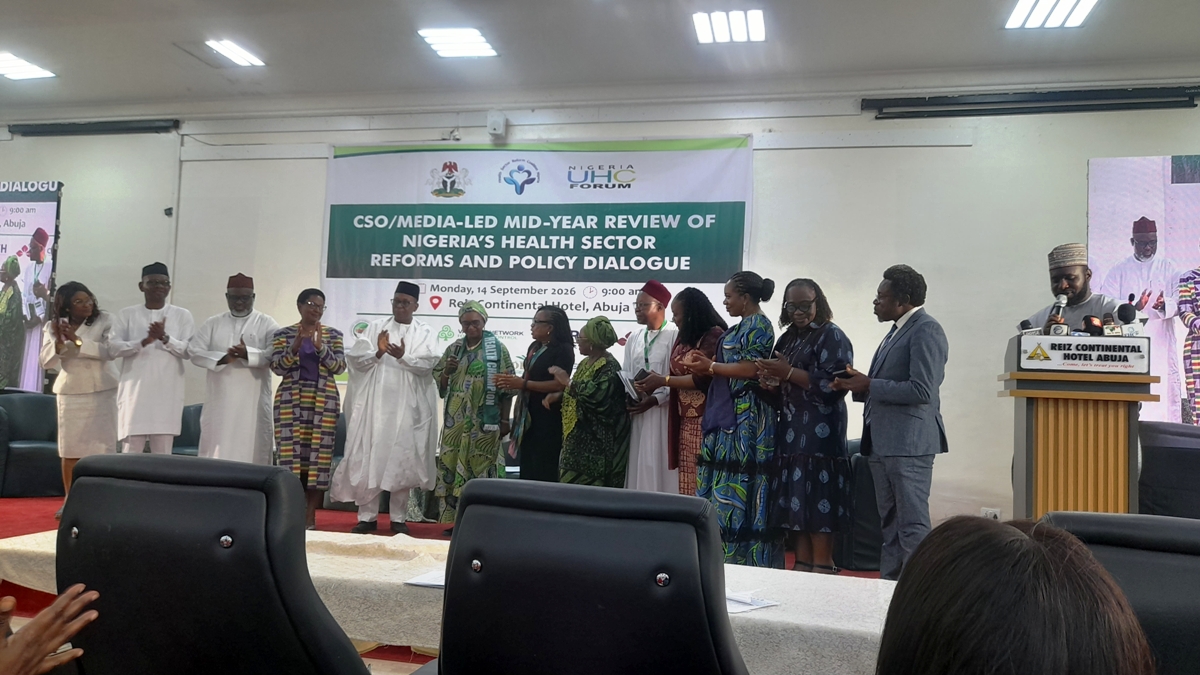
Senator Dr. Ipalibo Harry Banigo, Chairman, Senate Committee on Health (Secondary and Tertiary), is presented with the Health Champion 2026 recognition alongside the Coordinating Minister of Health and Social Welfare, Professor Muhammad Ali Pate, and other stakeholders during the policy dialogue in Abuja.
Government, civil society, development partners and the media review reform gains, confront implementation gaps and push for stronger accountability in the drive towards Universal Health Coverage.
ABUJA, Nigeria — Nigeria’s health sector reforms are facing a critical test: whether policies and programmes introduced in recent years can be institutionalised, sustained and translated into better health outcomes for citizens.
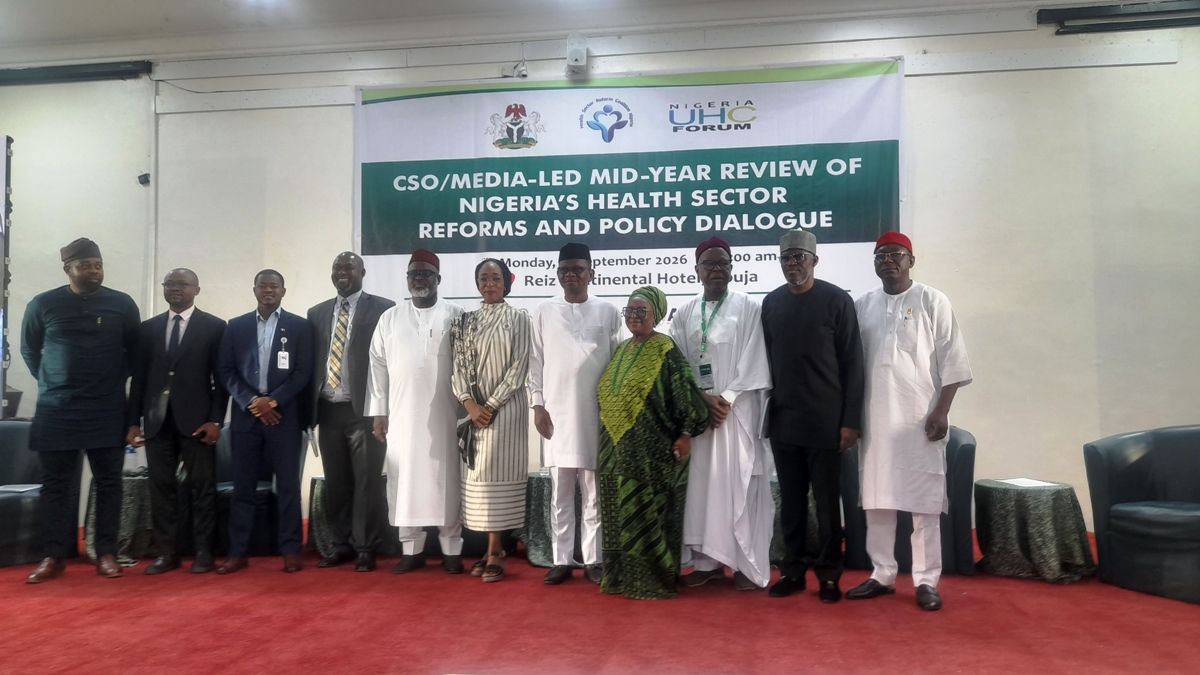
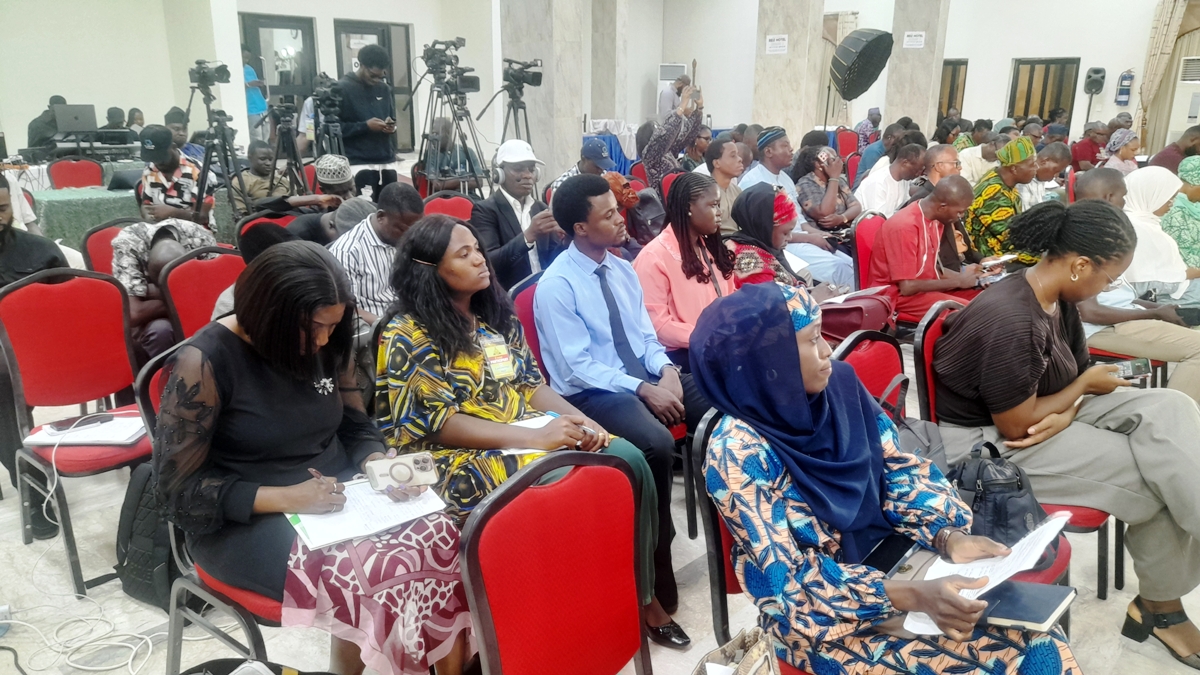
This was the central focus of the CSO/Media-Led Mid-Year Review of Nigeria’s Health Sector Reforms and Policy Dialogue, held on Monday, September 14, 2026, at the Reiz Continental Hotel, Abuja.
The high-level dialogue brought together government representatives, civil society organisations, development partners, health professionals and the media to assess progress in the health sector, identify implementation gaps and strengthen the path towards Universal Health Coverage.
Beyond activities to sustainable results
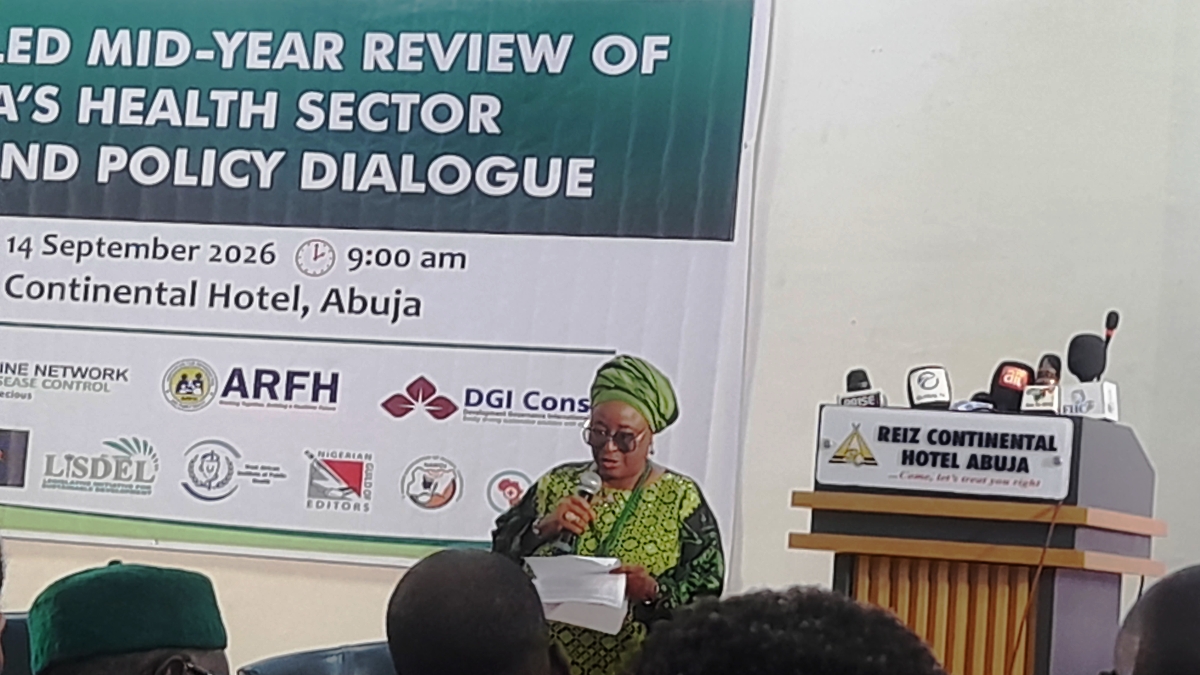
Speaking on behalf of the Nigeria UHC Forum, its Chair and Co-Convener, Chief (Mrs.) Moji Makanjuola, MFR, said the review should go beyond measuring activities and early results to examining whether Nigeria’s health system is becoming resilient enough to sustain progress.
According to her, stakeholders must ask not only what is working, but also why it is working, where it is working, whether it can be replicated and what is required to sustain it.
Makanjuola acknowledged positive shifts in some health indicators but expressed concern that progress remains uneven across the country, with some states recording stagnant or worsening health outcomes.
She stressed that the ultimate measure of reform is not the number of policies launched or programmes implemented, but whether such reforms strengthen the health system, improve access and quality, reduce inequalities and deliver measurable improvements in the lives of Nigerians.
Pate, stakeholders examine the next phase of reform
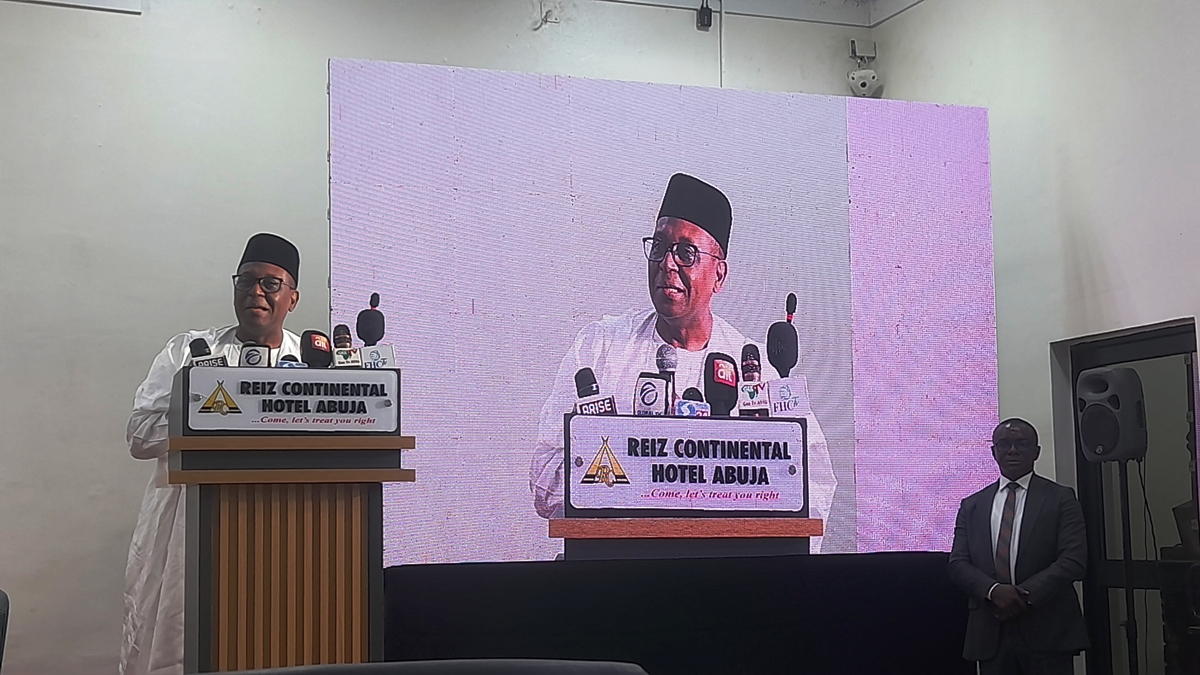
The Coordinating Minister of Health and Social Welfare, Professor Muhammad Ali Pate, participated in the dialogue and engaged stakeholders during a ministerial address and fireside discussion on the country's health reform agenda.
The discussions placed particular attention on the need for sustained political commitment, stronger domestic financing and continued collaboration between government and non-state actors.
Recent progress in the sector has demonstrated that improvements are possible, but stakeholders emphasised that maintaining those gains will require stronger institutions, predictable financing, effective implementation and continuous accountability.
Health financing and strong institutions remain critical
The dialogue also highlighted the importance of adequate financing and effective institutions in achieving Universal Health Coverage.
Senator Dr. Ipalibo Banigo, Chairman of the Senate Committee on Health (Secondary and Tertiary), was recognised during the event as a Health Champion, highlighting the importance of legislative engagement in advancing health-sector policy and financing.
The event also featured technical perspectives from key Federal Ministry of Health and Social Welfare gateway institutions, including the National Primary Health Care Development Agency (NPHCDA), National Health Insurance Authority (NHIA), Nigeria Centre for Disease Control and Prevention (NCDC), National Emergency Medical Treatment System (NEMTS), National Primary Health Care Development Agency-related institutions, NAFDAC and the Planning, Research and Statistics function of the Ministry.
Regulatory institutions also reinforced the importance of reliable health commodities, standards and effective regulation as essential components of Universal Health Coverage.
The media as an accountability partner
For Makanjuola, the media has a responsibility that extends beyond reporting government announcements.
She described the media as a critical bridge between policymakers and citizens, urging journalists and media organisations to strengthen evidence-based reporting on health reforms, financing, service delivery, equity and access to quality healthcare.
An independent and development-oriented media, she argued, can help sustain public awareness, amplify citizens' voices, track government commitments and draw attention to implementation gaps.
From dialogue to action
The meeting concluded with the review and adoption of a communiqué, a joint CSO-media action plan, advocacy commitments, responsibilities and timelines, signalling an effort to move the reform conversation beyond discussion towards measurable follow-up.
With the 2027 electoral cycle approaching, stakeholders also stressed the importance of keeping health high on the political agenda and strengthening citizens' participation in health-policy decisions.
The Abuja dialogue ultimately underscored a simple but consequential principle: the success of Nigeria's health reforms will be determined not merely by what is announced, but by what is sustained, implemented and experienced by citizens.
For Nigeria, the next phase of health reform is therefore not only about reform itself but results.